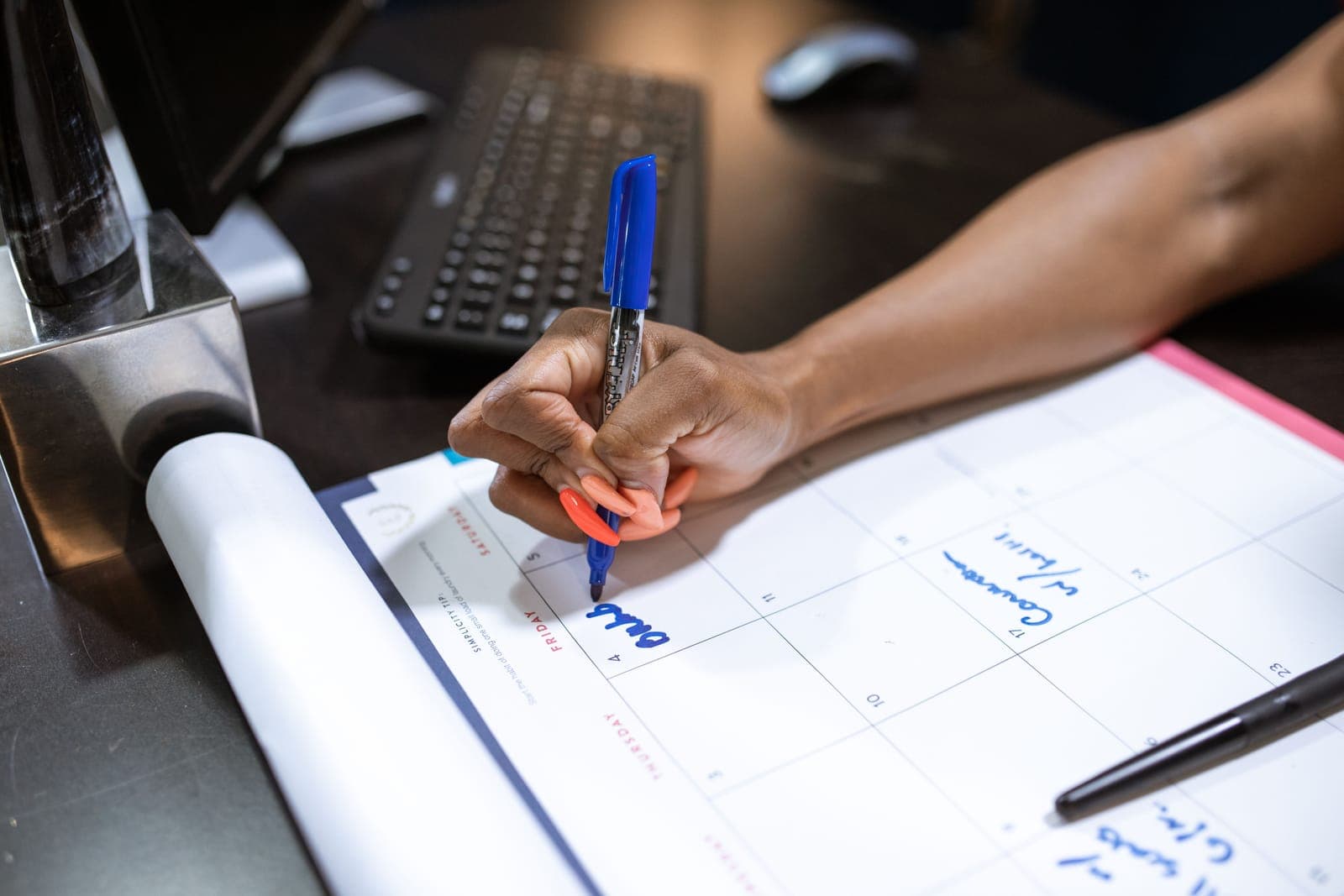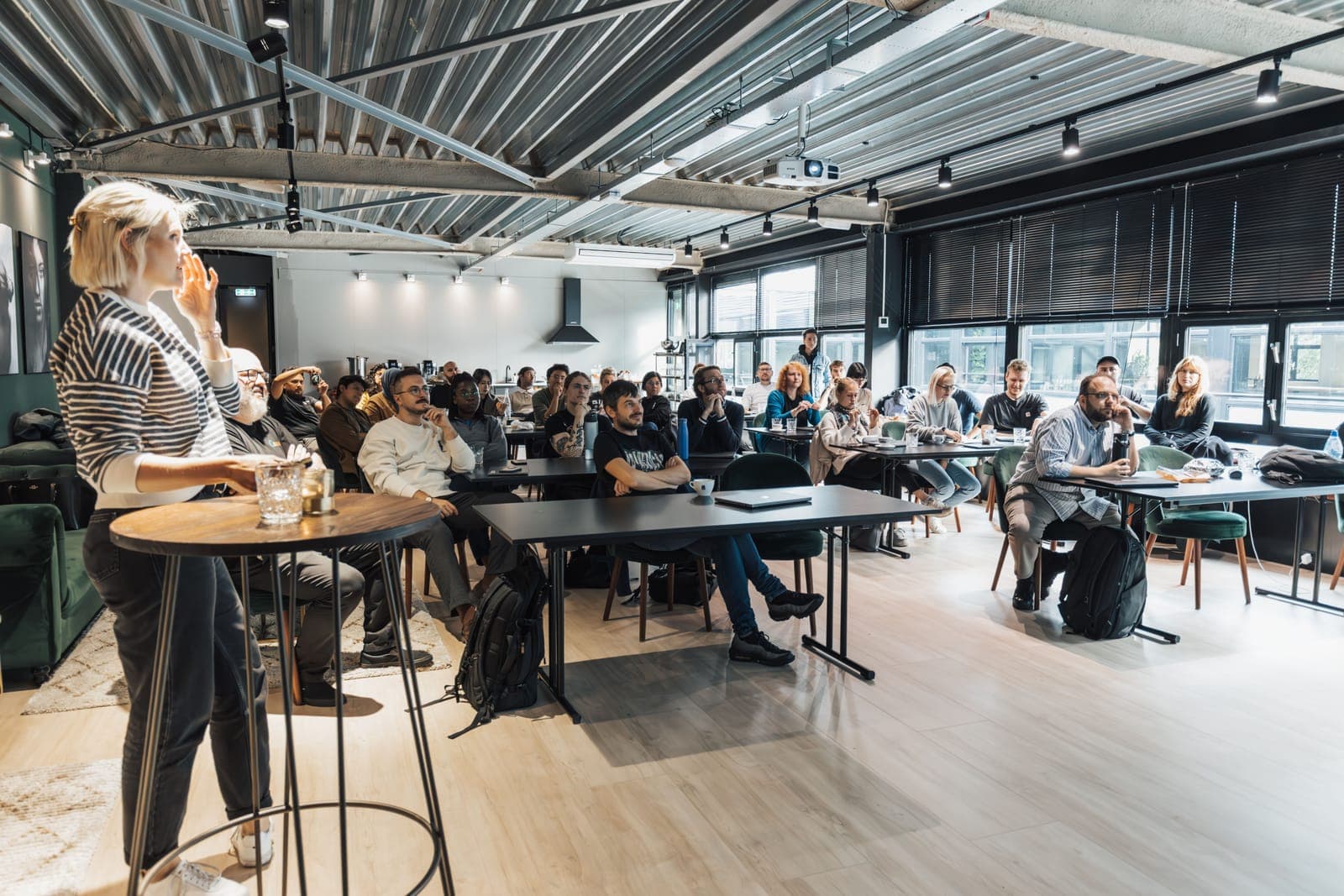
You said yes to running a workshop. Now you have a date, a room to fill, and a blank page where the plan should be.
A workshop is not a talk. In a talk, you present and people listen. In a workshop, people do the work, and your job is to set up the room so they can. That one difference changes how you plan every part of it.
This guide covers how to plan a workshop before the day and how to run a workshop on it, from the first goal to the follow-up email. It is the same backbone as the full event planning process, scaled down. The same steps work for a hands-on training, a half-day seminar, or a small networking session.
How to organize a workshop, step by step
Seven steps, in order: set one outcome, decide the group size, design the agenda, sort the logistics, promote it and open registration, run the day, then follow up. Sorting the logistics is the biggest of these, since it covers the venue, room setup, audio visual, and materials. Each step sets up the next. Skip ahead if a piece is already settled, and treat the rest as a checklist you come back to.
Step 1: Set one clear outcome
Before you pick activities or book a room, write down what people should be able to do differently when they leave. Not "a good session on onboarding," but one specific result: every manager drafts an onboarding plan they can use on Monday. Workshop guides from SessionLab and Mindtools both start here, because the outcome decides everything after it.
Make it a SMART outcome, specific and measurable, so you can tell afterward whether it worked. When two ideas for an exercise compete later, the one that serves the outcome wins.
Step 2: Decide the group size, and keep it small
A workshop thrives on participation, so the group has to be small enough that no one hides. For a working session aimed at a real decision, Mindtools suggests ten or fewer key attendees. Past that, either add a co-facilitator or split people into smaller groups for the hands-on parts.
Learn who is coming before you design anything. Their experience level, why they are there, and what they already know all change the exercises you pick. A room of beginners and a room of experts need different workshops on the same topic.
Step 3: Design the workshop agenda around doing, not telling
Your agenda is the core of the workshop. Build it in modules, each with one purpose, and keep asking what people will do in each block rather than what you will say. A useful frame is the 4Ps: prepare people for the idea, present it briefly, let them practice it, then have them perform or share what they made. Aim for variety and regular breaks over a wall of slides.
Time everything, then add more time than feels right. New facilitators pack in too many exercises and underestimate how long each takes, which is the most common way a workshop runs off the rails. Build in a break every 60 to 90 minutes and buffer minutes between activities, because the day will run long somewhere. A short dry run with a colleague shows you what to cut.
Step 4: Sort the venue, room, and materials
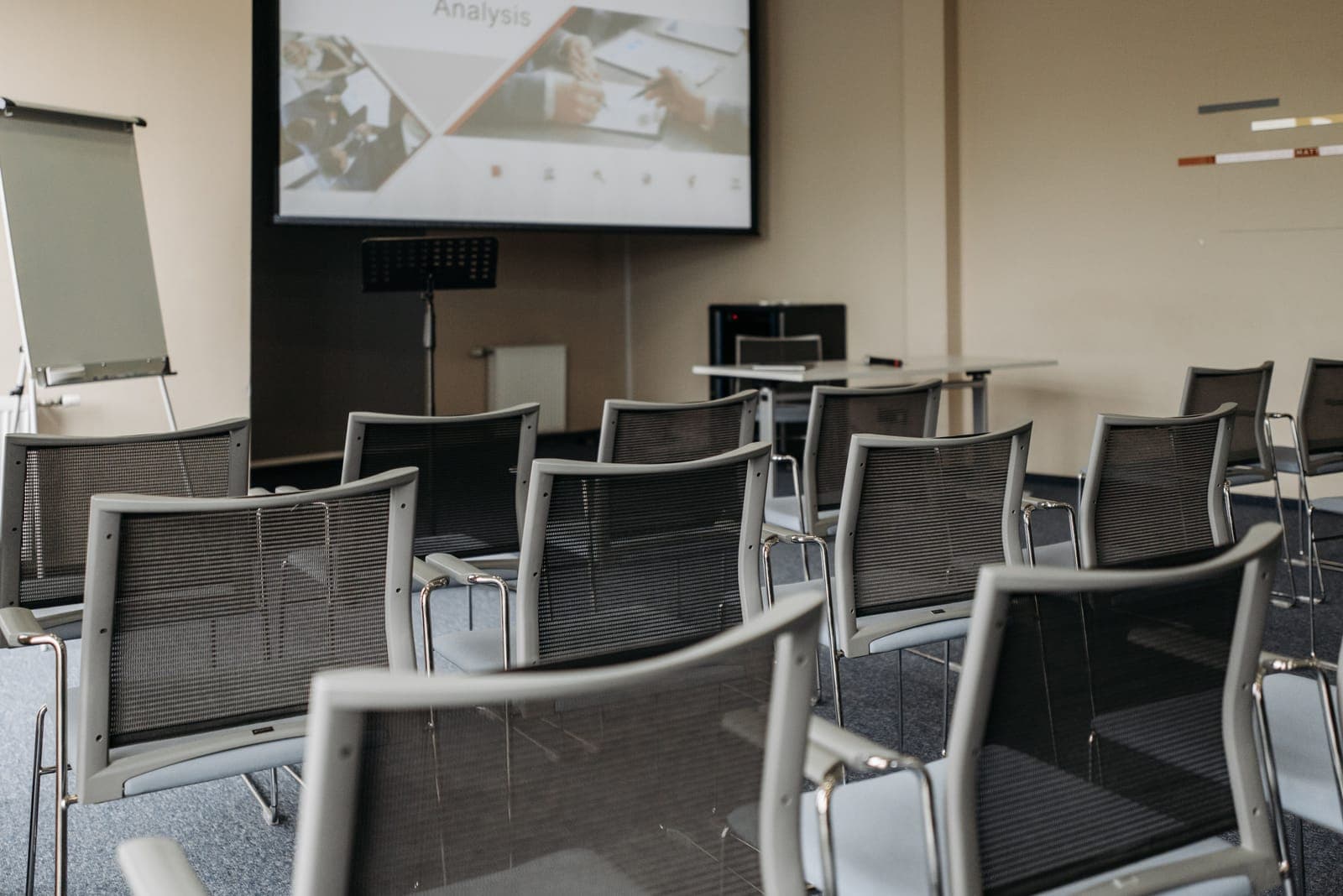
For an in-person workshop, the room is a working space, not a theatre. Pick a venue that is easy to get to, with transport and parking nearby, then set the furniture for the work: small tables for groups, wall space for sticky notes, clear sightlines to the screen. Check power, wifi, and the projector before the day, and carry backups of the cables and adapters that tend to fail.
Make a materials list and prepare it in advance: name tags, pens, sticky notes, markers, handouts, and anything the exercises need. Sort out refreshments and ask about dietary needs early. If you have co-presenters, collect their slides, bios, and handouts ahead of time so you are not chasing files the night before. Keep the venue, tech, and materials details in one place your whole team can see.
Step 5: Promote it and open registration
If the workshop is public, give people an easy way to sign up and start promoting earlier than feels necessary. Most people register late, and sign-ups tend to cluster in the final couple of weeks, so hold back some budget and energy for a late push instead of spending it all on day one.
For a small event, the people who already know you are your best source of sign-ups. Email your own list, ask any co-presenters to share it with their audience, and post in the specific groups where your ideal attendee already spends time. Early-bird pricing gives people a reason to commit now rather than later, and firmer numbers early let you plan catering, materials, and the room with less guesswork.
Step 6: Run the workshop on the day
Open by setting the frame, whether you are running the room yourself or briefing whoever is. The facilitator introduces themselves, says what the group will walk out with, and agrees a few ground rules: everyone takes part, every voice counts the same, and no answers are wrong in a brainstorm. A short icebreaker gets people talking before the real work starts.
Then the facilitator holds the time and stays out of the way, keeping each activity in its box, steering discussions back when they wander, and resisting the urge to lecture. Talking at people for three hours turns a workshop into a seminar. A simple run of show with timings for each block keeps everyone honest once the room is busy and the clock is moving.
Step 7: Follow up while it is fresh
The workshop is not over when people pack up. What they made or decided only sticks if you close the loop. Within a day or two, send a short summary: what the group covered, the outputs or decisions, and the next steps with an owner on each. Wait too long and the momentum fades, as SessionLab's planning guide points out.
Include a few feedback questions or a short survey so the next workshop is better. Then check back on the action items a few weeks later. That follow-up is what separates a workshop people enjoyed from one that changed how they work.
If you remember one thing
A workshop works when people do the work, not when you present it well. Set one clear outcome, keep the group small, and design every block around what people will make or decide. Plan the room and the timing so you can get out of the way on the day.