Skip to content
Glossary

What Does a Conference Organizer Do?

2 min read
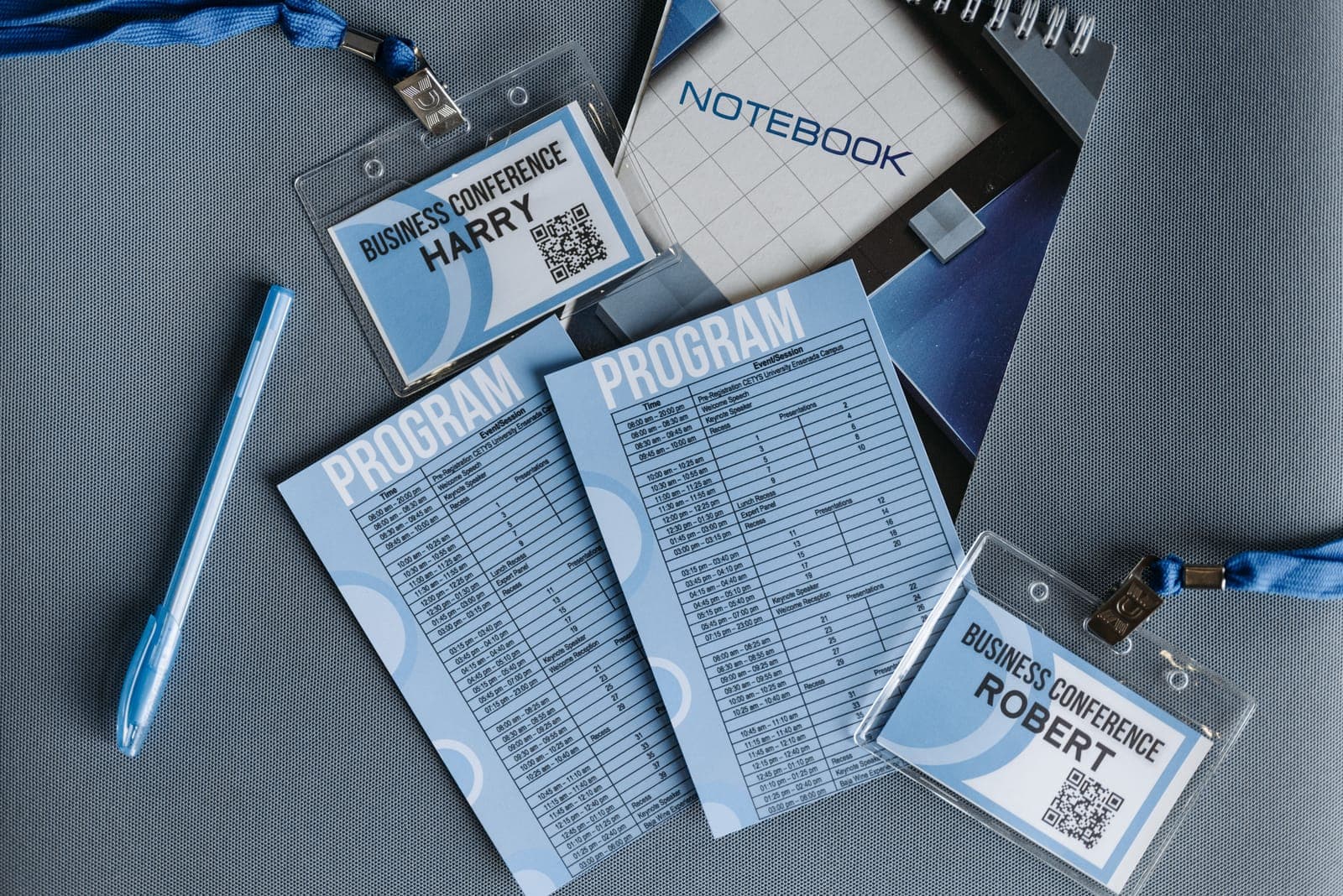
Flat lay arrangement of conference materials including badges, lanyards, program handouts, and notebooks with blue accent color.
The job runs past the event day: the organizer checks the bills, pays suppliers, surveys attendees and holds a debrief.

A conference organizer plans and runs a conference from the first budget to the last supplier payment. The organizer keeps track of every part of the event and is the main contact for the venue, suppliers, speakers and attendees. In British and Australian English the title is spelled conference organiser.
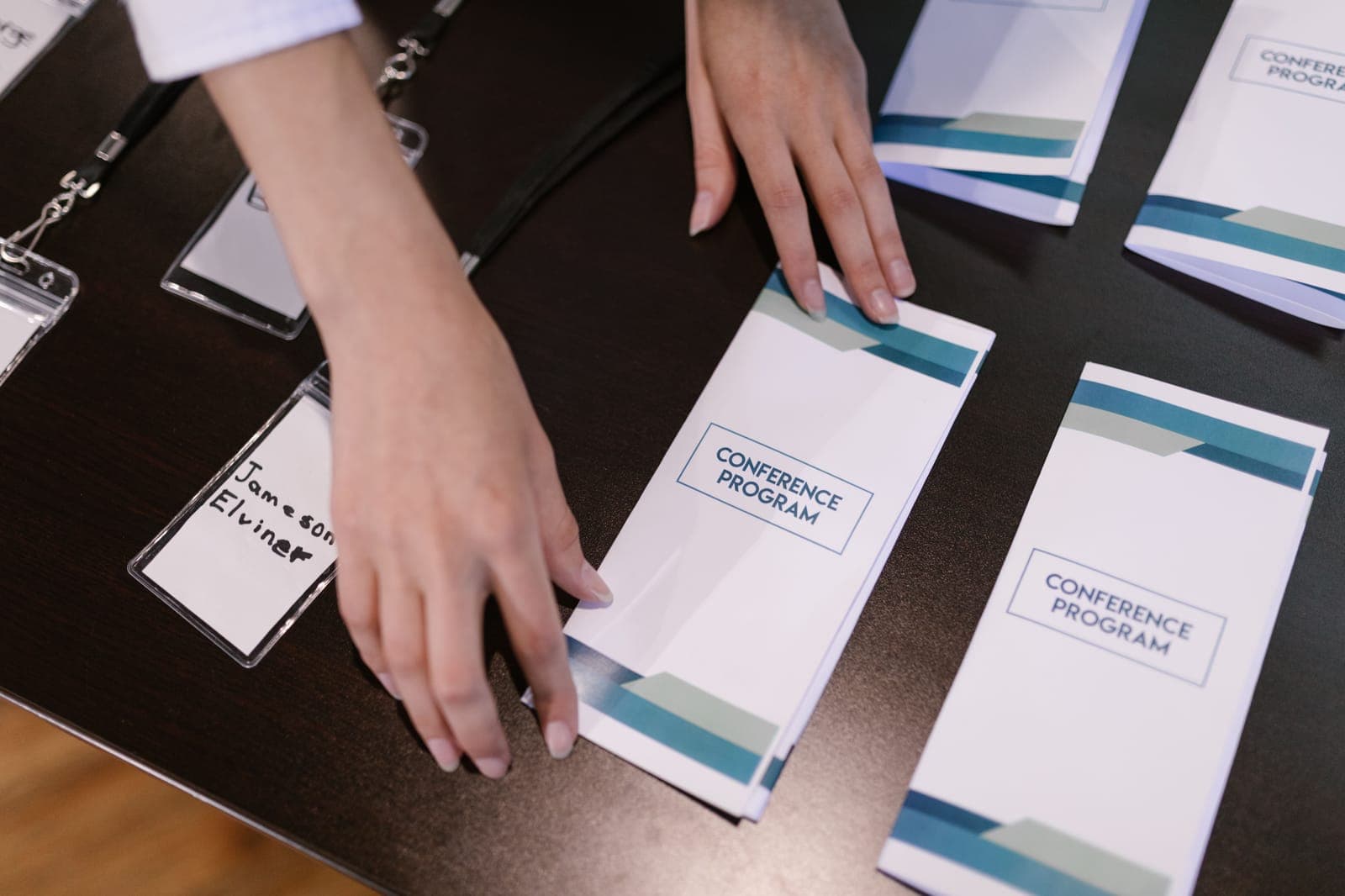
Person's hand arranging multiple white conference program booklets on a dark table surface.
A large share of the work is collecting slides, bios, headshots, logos and forms from dozens of people, each with its own deadline. Photo by Rdne

What a conference organizer does before the event

  • Goals and budget: agree on the conference's purpose and audience, then set the budget and the registration fees.
  • Venue and dates: pick dates that avoid holidays and clashing events, ask venues for proposals, visit the shortlist and sign the contract. If you hold a block of hotel rooms, the contract's attrition clause makes you pay when attendees book fewer rooms than you promised.
  • Program and speakers: choose the session formats, invite keynotes early, build the schedule and manage your speakers.
  • Sponsors and exhibitors: sell sponsor packages and exhibit space, and track who has paid.
  • Registration: open sign-ups, track how many people register and give the venue and caterer your final headcount.
  • Suppliers and AV: book catering, audiovisual, signage and transport, with every agreement in writing.
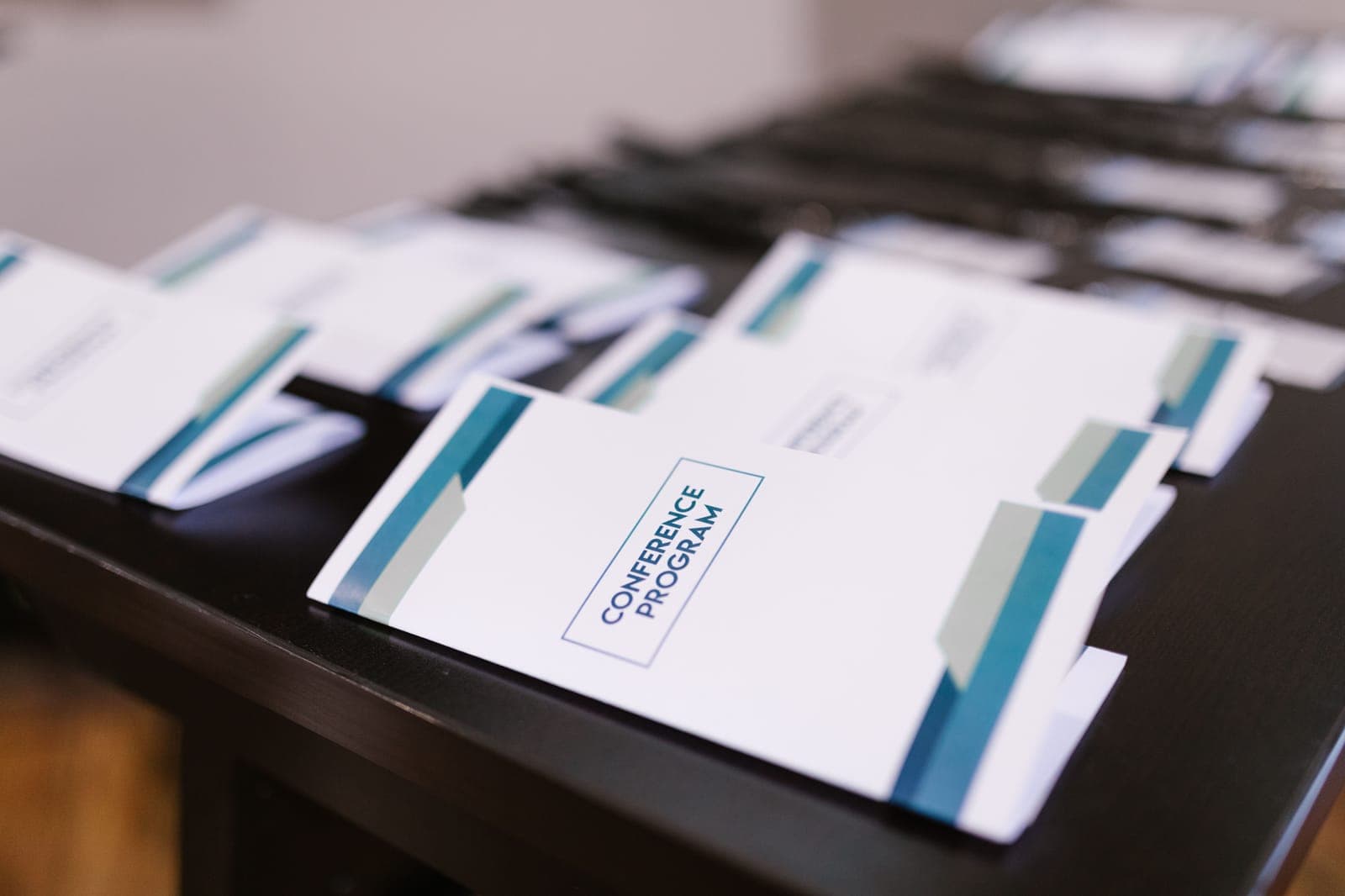
Multiple printed conference program booklets with blue accent stripes arranged in rows on a dark surface.
Large conferences are planned a year or more ahead, and IEEE's organizer timeline has venue contracts confirmed 24 to 36 months before the event. Photo by Rdne

During and after the event

On the day, you run the registration desk, keep sessions on time and look after speakers. You also work with the venue and the caterer so each room is set on time and meals and breaks are served when the program says. And you fix problems, from a no-show presenter to a dead projector.

You close out the event by checking the bills and paying suppliers, surveying attendees, thanking speakers and sponsors, and holding a short debrief. For the full sequence, see how to organize an event, step by step.

The hidden part of the job: collecting files

Most speakers owe you slides, a bio and a headshot. Sponsors send logos, and exhibitors send signed forms and, in many countries, proof of insurance. Each item has its own deadline, and the reminders and tracking fall to you. With Submitto, each group sends its files through one link, and you can see who is still missing.

FAQ

Questions, answered.

Is a conference organizer the same as an event coordinator?

Mostly, yes. The two titles overlap with each other and with meeting planner, and many job ads use all three for the same role. Where there is a difference, an event coordinator usually handles the logistics of an event someone else has planned, while the organizer owns the whole project, budget and program included. At an academic or association conference, the organizer is often a volunteer committee, with a chair, a treasurer and a program chair sharing the work.

What is a professional conference organizer (PCO)?

A PCO, short for professional conference organizer or professional congress organiser, is a company or an individual hired to run a conference for a client, often an association or a university. The PCO typically takes on the venue, registration, suppliers and sponsor sales, and the client's committee usually chooses the speakers and sessions. IAPCO, the international body that accredits PCO firms, reports that its accredited members organized 23,512 meetings and events in 2025.

How far ahead does planning start?

For a large conference, a year or more. The Community Tool Box at the University of Kansas advises contacting keynote speakers a year or more ahead, so they still have the date free. Some conferences start much sooner: IEEE's organizer timeline has venue and supplier contracts confirmed 24 to 36 months before the event. A small local meeting needs less lead time.

Test it out for free, no credit card required

Set up your event in about 10 minutes.

or

No sales call, no subscription.