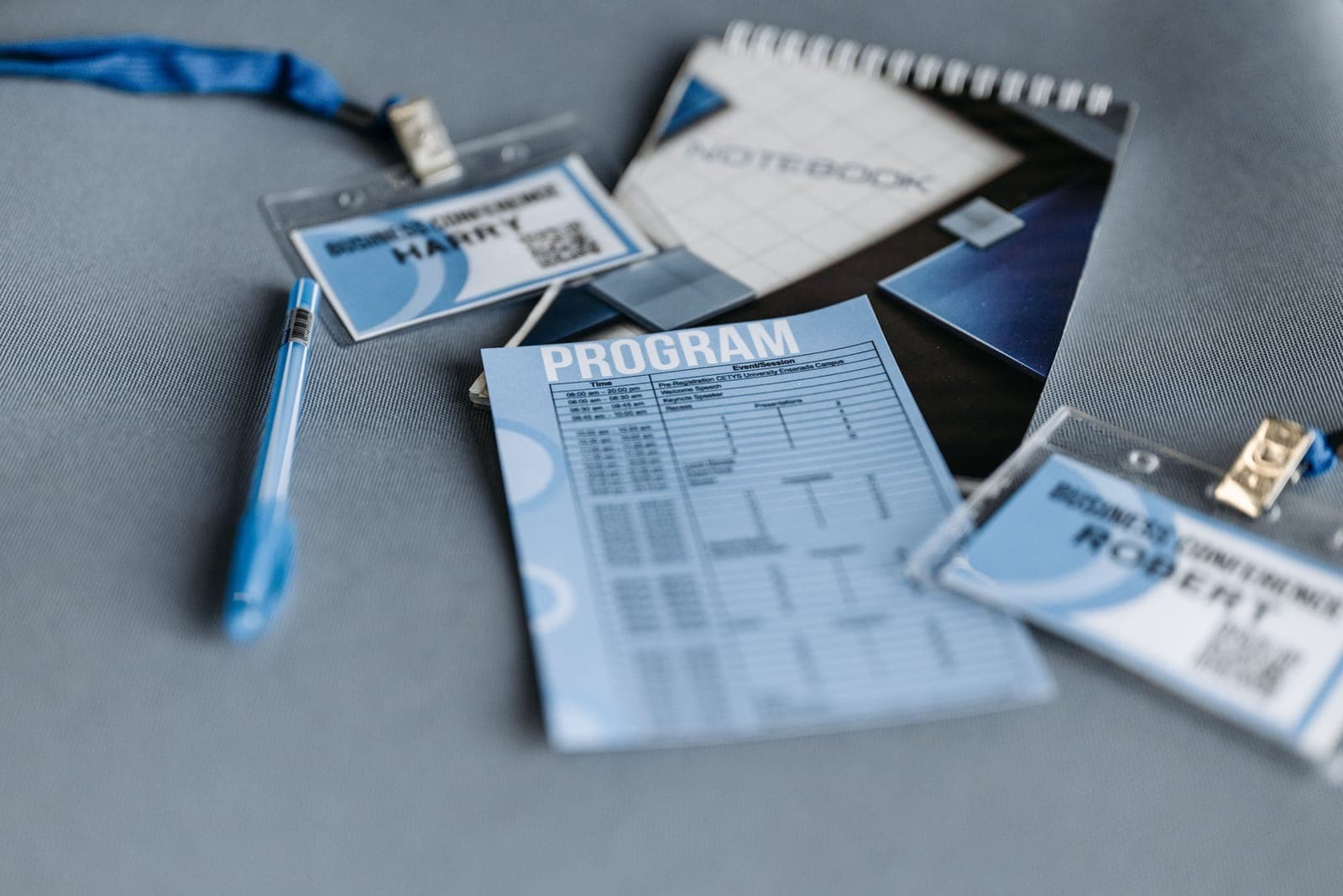
A run of show is the minute-by-minute internal plan your team runs an event from. It lists every segment and cue in chronological order, and each line carries a time, a duration, what happens, and the name of the person responsible. It covers the day from doors open to the final thank-you.
Run sheet, cue sheet, rundown: the same document
It goes by several names. A run sheet is the same document, and so are a cue sheet, a show flow, and a rundown. The wording shifts by industry and by country more than by meaning, so if a venue or an AV supplier asks for your run sheet, they are asking for your run of show.
Run of show vs the agenda
The document people most often confuse it with is the agenda. An agenda is attendee-facing: 9:00 welcome, 9:30 keynote, 10:15 break. It gives general time blocks and rarely changes once published. A run of show sits underneath that, breaking the same day into minutes and cues, and it keeps changing right up to showtime. Your agenda tells the room the day starts at 9. Your run of show tells the lighting tech to bring the spot up at 9:01:30 when the emcee walks on. That is why the run of show is built for your crew and never handed to attendees.

What goes in each row
A workable run of show has one row per segment, with a clock time, a running time, a duration, the segment or cue, a named owner, and a short notes field. Bigger productions add a location column and on-site contact numbers. The detail that separates a sheet that survives event day from one that does not is the owner column: every line belongs to a person, not to the team.
For the full build process, see how to build a run of show. If you want a structure to fill in, start from the free run of show template, and for filled-in versions of a keynote, a conference, a webinar and a gala, see the run of show examples.
Why it cannot be finished early
One thing no template solves: the sheet cannot be finished until every speaker's slides, video, and walk-on detail are actually in your hands. Submitto collects those files through one link, renamed and sorted by session, and tracks who is still missing.