Run of Show Examples: Four Real Samples You Can Copy
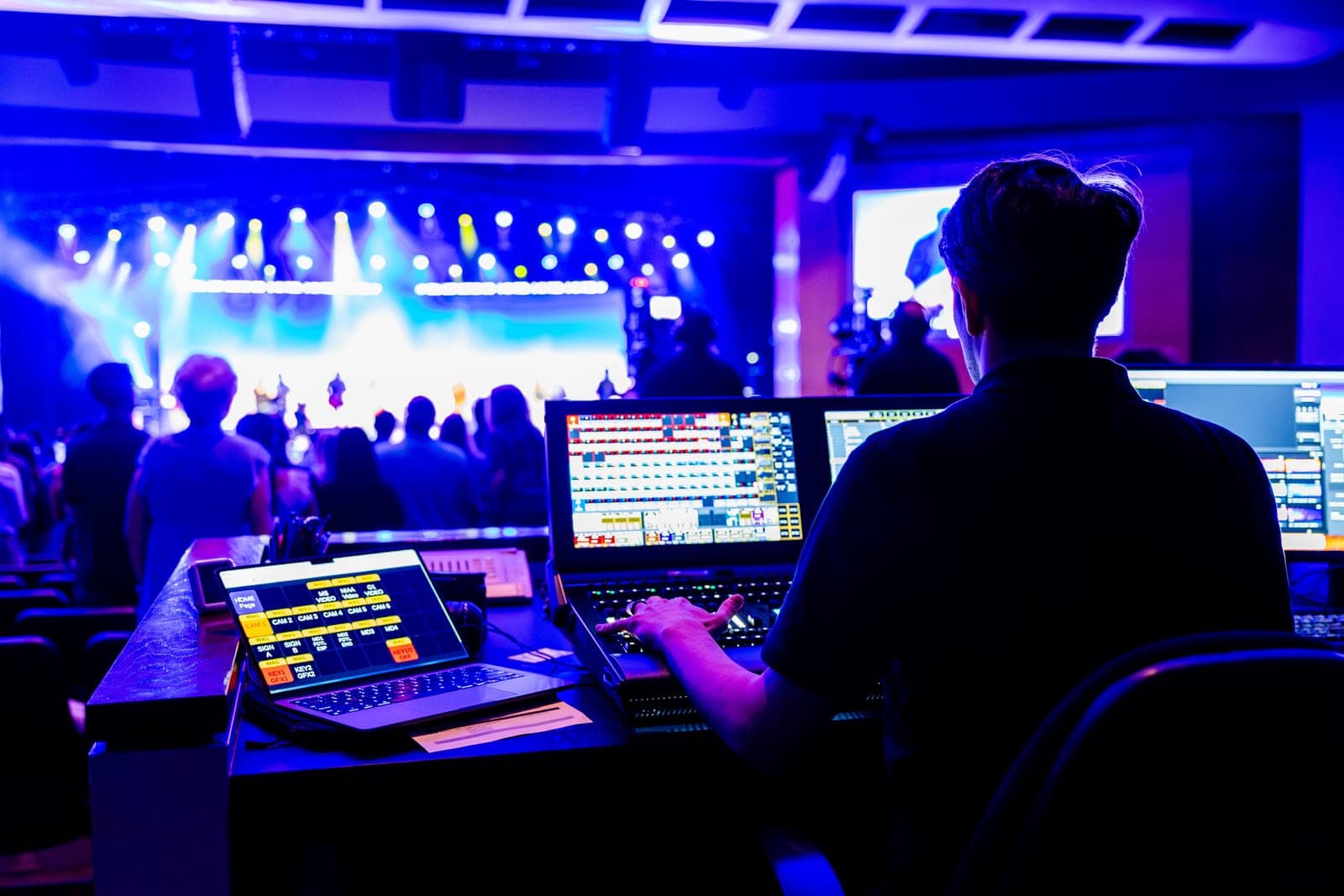
Your agenda says 9:00 a.m., keynote. Your crew needs to know who kills the house lights, when the walk-on music starts, and which video rolls after the welcome. That gap between the agenda and the actual minute-by-minute is what a run of show fills.
The fastest way to build one is to start from a real example and change the details. So here are four you can copy: a full-day conference, a single keynote broken down to the second, a webinar, and an awards gala. Every run of show example here is a stripped-down version of what a working event manager would actually run.
A run of show, also called a run sheet, cue sheet, or show flow, lists every segment and cue in order, with a time and a named owner for each line. It is built for your team, not your attendees, so you never share it with the room.
One thing every example assumes: the slides, videos, and bios that fill these rows are already in hand. Collecting them on time is its own job, and if you are still tracking who has sent their deck in a side spreadsheet, that is the part Submitto was built to take off your plate.
How to read these examples
Each sample run of show below uses the same columns. Change the rows, keep the structure.
- Clock and running time. The clock (2:15 p.m.) keeps everyone synced to reality. A running time (T+45, minutes from the top of the show) lets you recover when you start late, because every later cue shifts by the same amount.
- Segment or cue. Name the exact action. Rundown Studio warns against vague lines like "welcome video intro." Write "roll VID-01, 90 sec" instead.
- Owner. One name or role per line, in short crew labels: SM for stage manager, A1 for audio, LX for lighting, GFX for graphics. A named owner means a faster fix when something slips.
- Notes. Cue detail, a phone number, or a contingency like "if the speaker runs long, cut the sponsor video."
Two habits keep a run of show from falling apart. First, tie cues to something your team can see or hear, not only the clock. Even 10 seconds of drift can throw a lighting or sound cue, Stagetimer notes, so "on the emcee's last line" still fires when timing slips. Second, leave buffer: Rundown Studio gives transitions their own lines, since they double as breathing room when a segment runs long. And keep it short. The best run sheets are the clearest, not the longest, as Event Kit, a consultancy with 25 years in events, puts it.
For a blank structure to fill in, start from our run of show template. For how to build one from scratch, see the full run of show guide.
Sample run of show: a full-day conference
A single-track conference for a couple of hundred people. The keynote is one line here (T+10) with its own detailed sheet next, and every break and transition gets a line, because that is where time quietly disappears.
| Clock | Run | Segment / cue | Owner | Notes |
|---|---|---|---|---|
| 8:00 a.m. | T-60 | Doors and registration open | Reg lead | Coffee at back; badges by last name |
| 9:00 a.m. | T+0 | Emcee welcome and housekeeping | Emcee / SM | House lights up; wifi and exits slide |
| 9:10 a.m. | T+10 | Morning keynote (see keynote sheet) | Producer | Detailed on its own sheet below |
| 9:55 a.m. | T+55 | Transition and sponsor video | A1 / GFX | Roll VID-01; 90 sec buffer |
| 10:00 a.m. | T+60 | Morning break | Ops | Refill coffee; 15 min |
| 10:15 a.m. | T+75 | Breakout sessions, two rooms | Room leads | Room B mic check at 10:05 |
| 12:00 p.m. | T+180 | Lunch | Catering lead | Speakers at table 1 |
| 1:00 p.m. | T+240 | Panel discussion | Moderator | 4 mics; confidence monitor on |
| 3:30 p.m. | T+390 | Closing remarks and thanks | Emcee | Thank sponsors by name (list in notes) |
| 3:45 p.m. | T+405 | Doors close; teardown | AV / Ops | Collect lav mics; strike stage |
Run of show example: a single keynote, minute by minute
This is the 9:10 keynote from the sheet above, opened up. One agenda line becomes seven cued lines. That is the whole difference between an agenda and a run of show.
| Clock | Segment / cue | Owner | Notes |
|---|---|---|---|
| 9:10:00 | House lights to 50 percent; walk-on music up | LX / A1 | CUE-03; music bed 20 sec |
| 9:10:20 | Emcee intro, 60-second bio | Emcee | Read approved bio; check name pronunciation |
| 9:11:20 | Speaker walk-on; mic live | A1 | Lav 2; countdown timer starts at 25:00 |
| 9:11:50 | Slides up; speaker holds the clicker | GFX | Deck v4 loaded; advance on speaker |
| 9:34:00 | Five-minute warning to speaker | Timer op | Send "5 min" to the stage timer |
| 9:37:00 | Q and A; runner with mic | Emcee / runner | Two questions, then wrap |
| 9:39:30 | Thank you; slides to holding | GFX / LX | CUE-05; house lights back up |
Sample run of show: a webinar
No doors and no venue, and if the timing sags your audience leaves with one click. The bones are the same, with a tech-check line up front and a platform-cue column in place of lighting. Princeton's event team keeps it in a shared document every panelist can see, with a colleague on the chat and the Q and A.
| Time | Length | Segment | Owner / role | Platform cue |
|---|---|---|---|---|
| 1:45 p.m. | 15 min | Host and panel tech check | Producer | Test camera, audio, screen share |
| 1:58 p.m. | 2 min | Admit attendees from waiting room | Producer | Holding slide and music |
| 2:00 p.m. | 3 min | Welcome and housekeeping | Host | Say it is recorded; show how to ask questions |
| 2:03 p.m. | 20 min | Main presentation | Speaker | Producer advances if speaker shares |
| 2:23 p.m. | 2 min | Poll | Producer | Launch poll 1; read results aloud |
| 2:25 p.m. | 10 min | Live demo | Speaker | Backup recording ready |
| 2:35 p.m. | 12 min | Q and A from chat | Host and moderator | Moderator queues questions in order |
| 2:47 p.m. | 3 min | Wrap, next steps, and close | Host | Post link in chat; stop the recording |
Run of show example: an awards gala
An evening built around catering and a program. The move, borrowed from how fundraising galas run, is to start a short program item just after guests sit down, before the first course, then thread awards between courses so the room stays with you. Good audio and dimmed lights on the podium do the rest.
| Clock | Segment / cue | Owner | Notes |
|---|---|---|---|
| 6:30 p.m. | Cocktail reception; guests arrive | Front of house | Background music; bar open |
| 7:15 p.m. | Call to dinner | Venue staff | Start on time even if guests linger |
| 7:30 p.m. | Emcee welcome and first program item | Emcee | Short item before the first course |
| 7:35 p.m. | First course served | Banquet manager | Lower the music |
| 8:00 p.m. | Awards, part one, five awards | Emcee / GFX | Lights down except the podium; roll name graphics |
| 8:20 p.m. | Main course | Banquet manager | Program pauses |
| 8:50 p.m. | Honoree speech | Emcee | Confidence monitor; 8-minute cap |
| 9:05 p.m. | Awards, part two, and the ask | Emcee / GFX | Screen shows the running total |
| 9:20 p.m. | Thanks; dancing and dessert | Emcee / DJ | Band starts; program ends |
The mistakes these examples avoid
- Building it too late. Draft a few weeks out, so there is time to rehearse and fix problems.
- Vague lines. "John talks" tells the crew nothing. "CEO keynote begins, deck v4" tells them everything.
- Two versions in the wild. A run of show changes up to showtime, so keep one live shared copy. The moment a second version exists, someone runs the wrong one.
- One clock, no cues. Absolute times alone break the first time a speaker runs long. Pair each with a cue your team can see or hear.
Start from the closest example
Pick the example nearest your event, paste it into a shared sheet, and swap in your own times, segments, and owners. Keep everyone on that one live copy so no one works from a stale version.